

Val D'Aosta, Hearty, Rich and Creamy
- johncrallie
- May 30, 2020
- 4 min read
Val D’Aosta is in the far northwestern part of Italy. It is bordered by France and the French Alpes to the west, Switzerland to the north and the Piedmont region of Italy lies directly to the south. It is the smallest of all the Italian regions and the least densely populated region of Italy.

Italian and French are the official languages of the region, but the native population also speak a local dialect known as Valdostanno which is a dialectal style of Provencal French.
Being in the Alpes the climate is very cold with a snow season that can last for eight to nine months. In the warmer months it often rains and can be one of the wettest regions of Italy.
The cuisine of Val D’Aosta is characterized by simplicity and the use of robust ingredients. Potatoes, polenta, cheese, meat and a heavy rye bread are staples in the cuisine.
Vast alpine meadows are covered with lush grasses making the perfect place to graze large herds of dairy cattle. Many Val D’Aosta recipes are well known for their use of butter and cheeses. Many dishes involve the use of Fontina cheese, which is a cow’s milk cheese that originated in the area. The cheeses are not only eaten out of hand but are also used to make rich fondues as well as flavoring polenta, risotto, soups and other dishes.
In addition to milk the cattle provide meat for the community. A staple dish, Carbonnade is a beef stew made with salt preserved beef, onions, and red wine. It is almost always served with polenta.
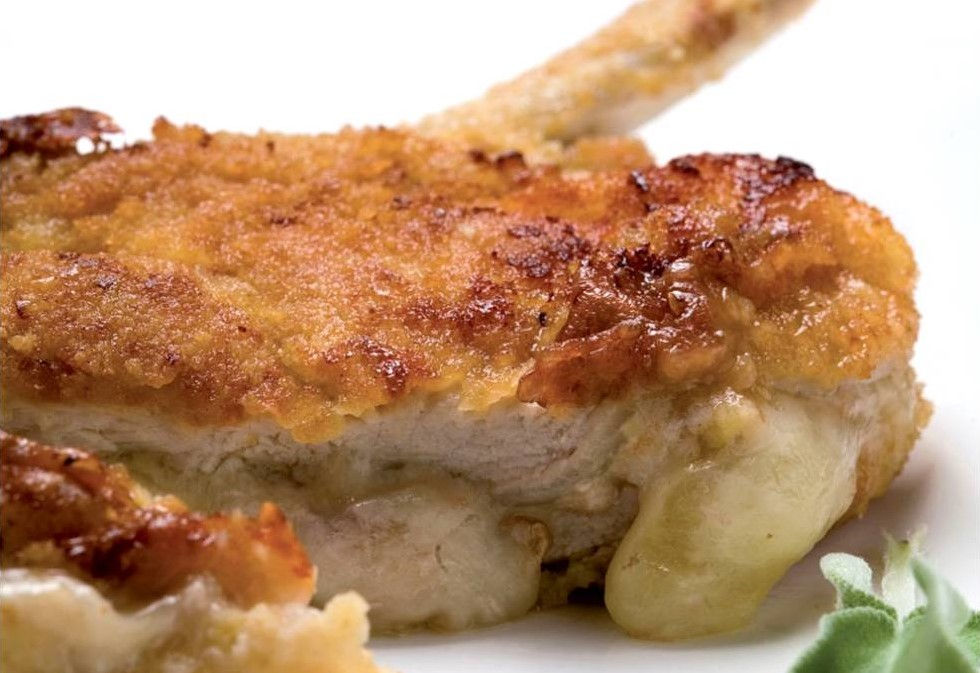
Veal is considered a prized protein in the area. Costoletta alla Valdostanna is a local favorite. Veal cutlets are pounded out until flattened, layered with thin slices of fontina cheese and prosciutto, breaded, fried then topped with finely shaved white truffles, Parmigiano Reggiano cheese and a rich cream-based sauce.
Recipe Costoletta Alla Valdostana
Ingredients
4 veal chops 4 oz. Fontina 1 egg, beaten breadcrumbs
flour for dusting the chops 3 oz. butter salt pepper white truffle (optional)
Directions
Butterfly the veal chops, leaving them attached to the bone. Flatten them slightly and place slices of Fontina and prosciutto in between the two pieces of meat. Add salt and pepper to taste and pound the edges together with a mallet.
Dredge the chops in the flour shaking of the excess. Dip in the beaten egg and the breadcrumbs. Melt the butter in a skillet. When hot, place the veal chops in and cook for 2 min. on each side, then place in an oven that has been preheated to 450°F until cooked through. Remove from oven and place in serving platter. Top with the cream sauce and a shaving of white truffles and serve.
Other area specialties are Motzetta, a dried chamois meat, a type of goat- antelope native to the mountains of Europe, that is similar to prosciutto, Lard D’Arnd, a cured and brined fatback product and Jamon de Bosses, which is a prosciutto style ham made from the meat of free-range pigs. The meat from these pigs is also used to make salt pork which appears often in many preparations native to the region. Many of these dried or cured meats are eaten with a heavy type of black bread that is regularly found in the area.
Unlike much of Italy pasta is not a staple food. Rice, polenta and gnocchi are much more prominent in the cuisine. Seafood is not often found in the cuisine of the area. Mountain stream trout are considered a very special treat. The trout fillets are normally prepared by stuffing them with bits of ham and fontina cheese then poaching them in white wine. The area cooking is also supplemented with wild rabbit, venison and game birds. Venison and vegetables are stewed in an herb cream sauce flavored with grappa. This dish is known as Capriolo alla Valdostana.
Due to the cold wet climate, hearty belly warming soups are a large segment of the diet. Minestra di Castange e Riso is a thick soup that is made by simmering chestnuts and rice in milk until it becomes a comforting porridge. Seupa de Gre is a barley soup made with seasonal vegetables, potatoes and salt pork. Seupa a La Valpellinentze is savoy cabbage, fontina cheese, ham, and rye bread cooked in beef broth with salt pork, spices and herbs. There is no shortage of calories in any of these soups. It is obvious that they were designed to keep you well fed and warm during the long, cold winters.
Polenta alla Rascard is a dish made form grilled slices of polenta that is then layered with a thick beef and sausage ragu topped with melted fontina cheese.
Risotto alla Valdostanna a creamy rice dish made with butter, fontina, toma and Parmigiano Reggiano cheese is a very traditional dish of simple ingredients. Take care when preparing this dish as it commands careful attention and loving care during the cooking process to achieve the classic texture of a perfect risotto, creamy but with an al dente bite in the center of the rice.
The region is dotted with fruit trees. Apples and pears from the region are sweet and used to make a variety of desserts. The fruit is often braised in red wine and the local honey is utilized as a sweetener.
The flavorful local honey is also used in baking. Tegole, a cookie named so for its resemblance to a roof tile and Torcetti, a ring-shaped cookie that is finished with a light dusting of powdered sugar are two examples.

I hope enjoyed our visit to Val D’Aosta and perhaps will try your hand with some of the plates we spoke about. As a disclaimer, I will not be responsible for your expanding waistline if you choose to overindulge in this rich and luscious cuisine.
In my next post we will travel to a region in the south of Italy where we will continue to examine the diverse regional cuisine of Italy.
Until then, alla prossima!
Buon cibo e buon appetito a tutti!!
Chef John


Comments