

Tajarin Pasta from Piedmont: History, Tips, and Perfect Sauce Pairings
Some pastas announce themselves with shape. Tajarin does it with texture. These golden, slender ribbons from Piedmont look delicate at first glance, but one forkful reveals a deeper story: rich egg dough, careful rolling, precise cutting, and a long cooking tradition that prizes restraint as much as flavor.
Tajarin, pronounced roughly “tie-yah-REEN,” is a quiet treasure of northern Italian cooking. It comes from Piedmont, the region tucked against the Alps and famous for Barolo, hazelnuts, white truffles, and slow-cooked meats. Unlike many pastas made with water and durum wheat, tajarin often uses a generous number of egg yolks. The result is a pasta that cooks quickly, holds sauce beautifully, and feels luxurious without needing much embellishment.
For home cooks, tajarin is a rewarding project. It asks for patience, not perfection. Once the dough comes together, the work becomes almost meditative: roll it thin, dust it lightly, fold it, cut it into ribbons, then cook it for just a minute or two. Dress it simply, and the pasta itself becomes the star.

Tajarin is defined by its rich egg dough and fine cut
Tajarin belongs to the family of fresh ribbon pastas, but it has its own character. It relates to tagliolini and tagliatelle, but it's usually thinner than tagliatelle and more delicate than many other egg pastas.
The first thing to notice is the color. Traditional tajarin often has a deep yellow hue because the dough can include many egg yolks. Recipes vary from home to home. Some cooks use whole eggs, some use yolks only, and many use a mix of both. Older Piedmontese recipes are famous for using many yolks, especially for special occasions.
That egg-rich dough gives tajarin three signature qualities:
A tender bite
The pasta feels delicate rather than chewy, especially when rolled very thin.
A rich flavor
Even with a simple butter sauce, the dough tastes full and rounded.
A silky surface
Fine ribbons easily catch melted butter, meat juices, cheese, and truffle shavings.
The flour matters too. In Piedmont, people often make tajarin with soft wheat flour rather than the semolina common in southern Italian pasta. For a home kitchen in the United States, all-purpose flour works well. Some cooks like to blend all-purpose flour with Italian “00” flour for a smoother dough. Either route can produce excellent results.
The cut is part of the identity. Tajarin should be narrow, long, and fine. It does not need to look factory-perfect. A slightly uneven hand-cut batch has charm, and those tiny variations help the sauce cling differently.
Tajarin has deep roots in Piedmontese home cooking
Tajarin isn't a pasta invented for restaurant menus, though it now appears in many excellent Piedmont restaurants. Its roots are domestic. For generations, families made it by hand for Sunday meals, holidays, weddings, and other gatherings where a richer dish felt appropriate.
The name comes from the Piedmontese dialect, where “tajarin” relates to cutting. That makes sense. This pasta is shaped as much by the knife as by the dough. Before pasta machines became common in home kitchens, cooks rolled dough sheets by hand and cut them into fine ribbons with practiced speed.
Its history also reflects Piedmont’s place in Italian cuisine. Piedmontese food often feels more northern than Mediterranean. Butter may appear where olive oil dominates elsewhere. Meat sauces and long-braised dishes are common. Cheese, eggs, wine, and seasonal specialties play central roles. Tajarin fits perfectly into that style.
The pasta also shares the table with two of the region’s most prized ingredients: white truffles from the Alba area and noble red wines such as Barolo and Barbaresco. That pairing helped give tajarin cultural weight beyond the home kitchen. During truffle season, a plate of tajarin dressed with butter and showered with fresh white truffle is one of Piedmont’s most iconic dishes.

Tajarin shows how Italian cuisine can turn a few ingredients, flour, eggs, butter, cheese, and patience, into something that feels deeply tied to place.
Its cultural significance comes from that balance. It is humble and luxurious at the same time. You can serve it with a rustic meat ragù or one of the world’s most expensive seasonal ingredients. In both cases, the pasta remains rooted in the same idea: make the dough well, cut it fine, and let the sauce support it rather than bury it.

Making tajarin at home is easier when the dough is handled gently
Tajarin has a reputation for being special, but it does not require rare equipment. A pasta machine helps, but a rolling pin works too if you have enough patience and counter space.
A basic home version starts with flour and eggs. For about 4 servings, use roughly 2 cups of flour and a mix of whole eggs and yolks. A common approach is 2 whole eggs plus 4-6 yolks. The exact amount depends on egg size and how much liquid the flour absorbs.
Start by piling the flour on a clean work surface and making a well in the center. Add the eggs and yolks into the well. Beat them lightly with a fork, then start pulling in flour from the inner wall of the well. Once the mixture thickens, use your hands or a bench scraper to bring it together.
At first, the dough may look shaggy. That is normal. Knead until smooth and elastic, usually 8 to 10 minutes by hand. If it feels sticky, dust it lightly with flour. If it feels dry and cracked, dampen your hands and continue kneading. Avoid adding too much extra flour, since a stiff dough can be hard to roll thin.
Resting is not optional. Wrap the dough tightly and let it sit at room temperature for at least 30 minutes. This gives the flour time to hydrate and allows the gluten to relax. The dough rolls out more easily after this pause.
When ready to shape, divide the dough into smaller pieces. Keep the pieces you are not using covered so they do not dry out. Roll one piece at a time into thin sheets. If using a pasta machine, start on the widest setting and pass the dough through several times, folding it between early passes to build structure. Then move gradually to thinner settings.
For tajarin, the sheet should be thin enough to feel delicate but not so thin that it tears the moment you lift it. Dust it lightly with flour, fold it loosely, and cut it into very narrow ribbons. Unfurl the strands and toss them gently with a little flour or fine semolina to keep them from sticking.
A few practical details make the process smoother:
Use room-temperature eggs
They mix more easily into the flour and help the dough come together.
Rest the dough before rolling
Resting softens the dough, smooths it, and makes it less likely to spring back.
Dust lightly, not heavily
Too much flour on the sheets can make the cooked pasta cloudy or gummy.
Cut with confidence
A sharp knife and steady motion create cleaner ribbons.
You can cook fresh tajarin right away, hold it in loose nests briefly, or freeze it. To freeze, arrange nests on a tray until firm, then transfer them to a freezer-safe bag or container. Cook from frozen without thawing.
Cooking tajarin perfectly takes speed and attention
Fresh tajarin cooks fast. Very fast. That is where many first attempts go wrong. Because the noodles are thin and egg-rich, they can go from tender to overcooked faster than dried pasta softens.
Bring a large pot of water to a rolling boil. Salt it well. The water should taste seasoned, though not harsh. Fresh pasta doesn't need much time to absorb flavor, so the cooking water matters.
Add the tajarin and stir gently right away. This keeps the ribbons from clumping. Fresh tajarin usually cooks in 1 to 3 minutes, depending on thickness and how dry it is. Start checking early. The goal is tender pasta with just enough structure to hold its shape.
Before draining, save a cup of pasta water. Even with butter-based sauces, a splash of starchy water helps bring everything together. It loosens the sauce, adds body, and helps it coat the fine strands.
The best way to finish tajarin is in the sauce pan. Gently heat the sauce, add the drained pasta, and toss with a little pasta water as needed. Use tongs or a wide spoon, and be gentle. Tajarin can tangle or break if handled roughly.
For better results, keep these cooking tips in mind:
Tip | Why it helps |
Use plenty of boiling water | The ribbons have room to move and are less likely to stick. |
Stir right after adding the pasta | This separates the strands before the starch sets. |
Start tasting after 60 seconds | Thin fresh noodles can cook much faster than expected. |
Finish in the sauce | The pasta absorbs flavor and develops a silky coating. |
Serve immediately | Tajarin is best when hot, glossy, and tender. |
One more point: don't overload tajarin with sauce. The pasta is fine and delicate. Heavy sauces can flatten its texture. Think coating, not drowning.

The best sauce pairings let tajarin shine
Tajarin’s richness gives it range. It pairs well with butter, truffles, meat sauces, mushrooms, cheese, and herbs. The key is balance. The sauce should meet the pasta’s eggy flavor without covering it up.

Butter and sage keep the focus on the pasta
Melted butter with fresh sage is one of the simplest and most satisfying pairings. Let the butter foam gently until it smells nutty, then add sage leaves for a brief sizzle. Toss the cooked tajarin with a splash of pasta water, then finish with grated Parmigiano-Reggiano.
This sauce works because it respects the pasta. The butter highlights the yolk-rich dough, while sage adds a savory herbal note. It is also an excellent first sauce for anyone making tajarin at home for the first time.
White truffle turns tajarin into a Piedmont classic
If one pairing is most closely tied to Piedmont, it is tajarin with butter and white truffle. The dish is spare by design. Fresh pasta, good butter, and thin shavings of truffle at the table. That is it.

White truffle has a powerful aroma, so it does not need heat or a complicated sauce. In fact, heat can dull its fragrance. Toss the pasta with butter, plate it, then shave the truffle over the top just before serving.
This is a special-occasion version, especially outside Italy, where fresh white truffles can be costly and seasonal. Still, it shows the spirit of Piedmontese cooking better than almost anything else.
Ragù brings depth and comfort
Tajarin also works beautifully with meat ragù. In Piedmont, sauces may feature veal, beef, pork, rabbit, or sausage, often cooked slowly with wine and aromatics. The sauce should be rich but not too wet. A thick, finely textured ragù clings to tajarin without weighing it down.

Use a moderate amount. The pasta should still be visible on the plate, with the ragù woven through the strands. A finishing touch of cheese is welcome, but keep it restrained if the sauce is already rich.
Mushrooms add earthiness without heaviness
Wild mushrooms naturally pair with tajarin. Porcini are especially good, whether fresh in season or dried and rehydrated. Sauté mushrooms in butter or olive oil with garlic, if desired, and a little thyme or parsley. Add pasta water to create a light coating, then toss with the cooked noodles.
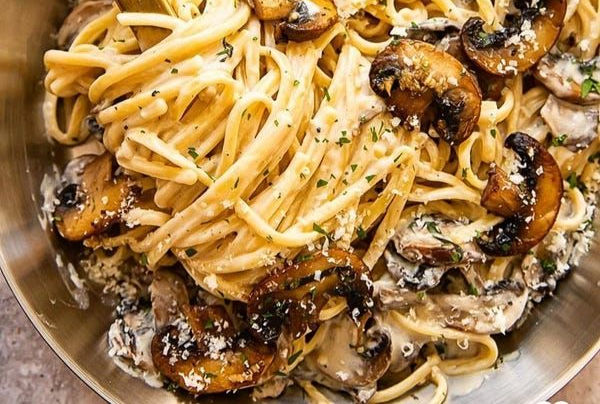
This pairing has some of the same earthy appeal as truffles, but it is easier to make on a regular weeknight. It also suits Piedmontese food's cool-weather character.
Cheese and pepper make a simple pantry version
For a quick sauce, use butter, pasta water, Parmigiano-Reggiano, and black pepper. It is not traditional Roman cacio e pepe, but it borrows the same idea of using starchy water and cheese to create a creamy coating without cream.
The trick is to keep the heat low when adding the cheese. Too much heat can make it clump. Toss patiently, loosen with small splashes of pasta water, and serve right away.
Cream should be used with care
A small amount of cream can work with mushrooms, ham, or cheese, but tajarin rarely needs a heavy cream sauce. Egg pasta already has richness. If using cream, keep the portion modest and sharpen the dish with black pepper, herbs, or a little aged cheese.

A few small choices make tajarin memorable
Tajarin rewards attention to detail. None of the steps are difficult on their own, but each one affects the final plate. Properly rested dough rolls thinner. A light dusting of flour keeps the noodles separate without roughening them. A short cook preserves the tender bite. A simple sauce lets the pasta’s flavor come through.
If making it for guests, prepare the nests ahead of time and choose a sauce that can wait for the pasta, not the other way around. Butter and sage, mushroom sauce, or a finished ragù all work well. Once the tajarin enters the boiling water, the meal moves quickly.
For a full Piedmont-inspired dinner, serve tajarin as a first course rather than a huge main dish. Follow it with roasted meat, braised vegetables, or a simple salad. Pair it with a Piedmontese red, such as Barbera, Dolcetto, or Nebbiolo. For a lighter pairing, a dry white from northern Italy can also work.
The real pleasure of tajarin is that it feels special without being fussy. It carries history, regional pride, and the comfort of handmade pasta in one bowl. Start with flour and eggs, give the dough time, cut the ribbons fine, and choose a sauce that knows when to step back. That is the heart of this Piedmont classic, and it is more than enough reason to make it at home.
Thank you for visiting my blog. If you find this post valuable and would like to receive similar content in the future, please consider subscribing at www.buoncibo.online. Simply enter your email address in the designated field located at the top or bottom of each page.
If you think others may benefit from this post, I would appreciate you sharing it with your network, as expanding my readership is important to me.

Best regards,
Buon appetito!
Chef John / Giovanni


Comments