

Exploring Basilicata Culture and Cuisine
- johncrallie
- Jul 21
- 10 min read
Basilicata is the kind of place that rewards patience. It does not shout for attention like Rome, Naples, or the Amalfi Coast. It waits in the arch of a stone doorway, in a bowl of handmade pasta, in the dry sweetness of a pepper hung to cure in the sun.
Set in southern Italy between Campania, Puglia, and Calabria, Basilicata has mountains, two short coastlines, ancient cave districts, wheat fields, olive groves, and villages that cling to cliffs like they were carved there rather than built. Its older name, Lucania, still carries deep meaning. Many locals use “Lucanian” when they speak about identity, food, wine, and history.
To understand Basilicata culture and cuisine, start with this simple idea: the region has long been shaped by distance. Its terrain kept communities separate. Its food grew from necessity. Its traditions survived because families, shepherds, farmers, bakers, and artisans kept repeating them until they became memory.
Basilicata is a region of stone, silence, and strong identity
Basilicata sits in the instep of Italy’s boot. It has a small Tyrrhenian coastline around Maratea and a wider Ionian side near Metaponto, but much of the region is inland. The Apennines rise through it. Roads twist through valleys and high villages. Winters can be cold in the interior, while summers are dry and bright.
That geography matters. It explains why the region feels less polished than more famous parts of Italy. Basilicata was historically poor, rural, and often overlooked by outside powers. Yet that isolation helped preserve customs that might have faded elsewhere.
Matera is the region’s best-known city, and for good reason. Its Sassi, the ancient cave neighborhoods carved into limestone, are a UNESCO World Heritage Site. The city has been inhabited for thousands of years, and its stone homes, churches, cisterns, and stairways create one of Italy’s most powerful urban scenes.
Potenza, the regional capital, sits high in the mountains. It feels different from Matera, more administrative and modern in parts, but still deeply tied to the surrounding countryside. Other towns reveal different pieces of the Lucanian character:
Venosa, birthplace of the Roman poet Horace, has Roman ruins, medieval streets, and Jewish catacombs.
Melfi carries Norman and Swabian history, including links to Frederick II.
Aliano is associated with writer and painter Carlo Levi, who was exiled in Lucania and later wrote about the region.
Maratea offers the blue-sea version of Basilicata, with coves, cliffs, and a hilltop old town.
Pietrapertosa and Castelmezzano rise among the jagged Dolomiti Lucane, two of the most dramatic villages in southern Italy.
Basilicata does not feel like one single place. It feels like a collection of small worlds connected by dialect, resilience, and a shared respect for the land.
Culture here lives in ritual, craft, and memory
Lucanian culture often feels practical on the surface. Houses are built to last. Food is preserved for winter. Festivals follow the agricultural year. Even religious celebrations often carry older layers of meaning, tied to forests, harvests, animals, and protection.
Matera shows how hardship became heritage
Matera’s story is complex. The Sassi were once described as a symbol of poverty, especially in the mid-20th century, when many residents lived in difficult conditions alongside animals and without modern sanitation. Government relocation changed the city, and later restoration brought new life to the cave districts.
Today, Matera is celebrated for its beauty, but the lesson is deeper than scenery. The Sassi show how people adapted to a harsh environment. They collected rainwater in cisterns. They carved homes into rock for insulation. They turned scarcity into a way of living.
Walking through Matera is not just sightseeing. It is a reminder that culture is often born from problem-solving.
Festivals connect towns to the seasons
One of Basilicata’s most striking traditions is the Maggio di Accettura, often described as a tree marriage. During the festival, two trees are brought from the forest and joined in the town. The ritual is linked to spring, fertility, and community devotion, with Christian and pre-Christian elements woven together.
In Matera, the Festa della Madonna della Bruna takes place each year on July 2. It includes a decorated cart, processions, and a dramatic finale in which the cart is pulled apart by the crowd. The celebration expresses devotion, release, and local identity all at once.
In Satriano di Lucania, the Rumita is a figure covered in ivy who appears during Carnival season. The character is quiet, forest-like, and symbolic, a reminder of the bond between people and nature.
These traditions are not performances invented for visitors. They are community acts. Outsiders can watch, but the meaning belongs first to the towns themselves.
Language and minority communities add depth
Italian is the shared language, but dialects carry local identity. Basilicata’s dialects vary from town to town, shaped by Greek, Latin, Norman, Spanish, and other influences over time.
The region is also home to Arbëreshë communities, descendants of Albanians who settled in southern Italy centuries ago. Towns such as San Paolo Albanese and San Costantino Albanese preserve elements of Arbëreshë language, dress, religious tradition, and music.
This layered identity makes Basilicata feel quietly rich. It is not a place of one story, but of many histories living under the same roof.
The cuisine begins with cucina povera
Basilicata’s food is often described as cucina povera, or poor cooking. That phrase can sound limiting, but it points to skill rather than lack. Lucanian cooks learned to make memorable meals from flour, legumes, wild greens, pork, dried peppers, olive oil, cheese, and whatever the season allowed.
The result is food with strong flavors and little excess. It is rustic, but not careless. Simple, but rarely plain.
Bread is central. Pasta is handmade. Meat appears with purpose, not always in abundance. Vegetables are dried, pickled, sautéed, or turned into soups. Nothing is wasted if it can be transformed.
A classic Lucanian table might include:
Homemade pasta with breadcrumbs, beans, or tomato
Peperoni cruschi, crisp dried sweet peppers
Aged sheep’s milk cheese
Sausage seasoned with fennel or chili
Bitter greens with olive oil and garlic
Country bread with a firm crust
A glass of Aglianico del Vulture
The food reflects the region’s terrain. Mountain villages, wheat fields, grazing animals, and coastal areas all leave their mark.
Peperoni cruschi are Basilicata’s signature ingredient
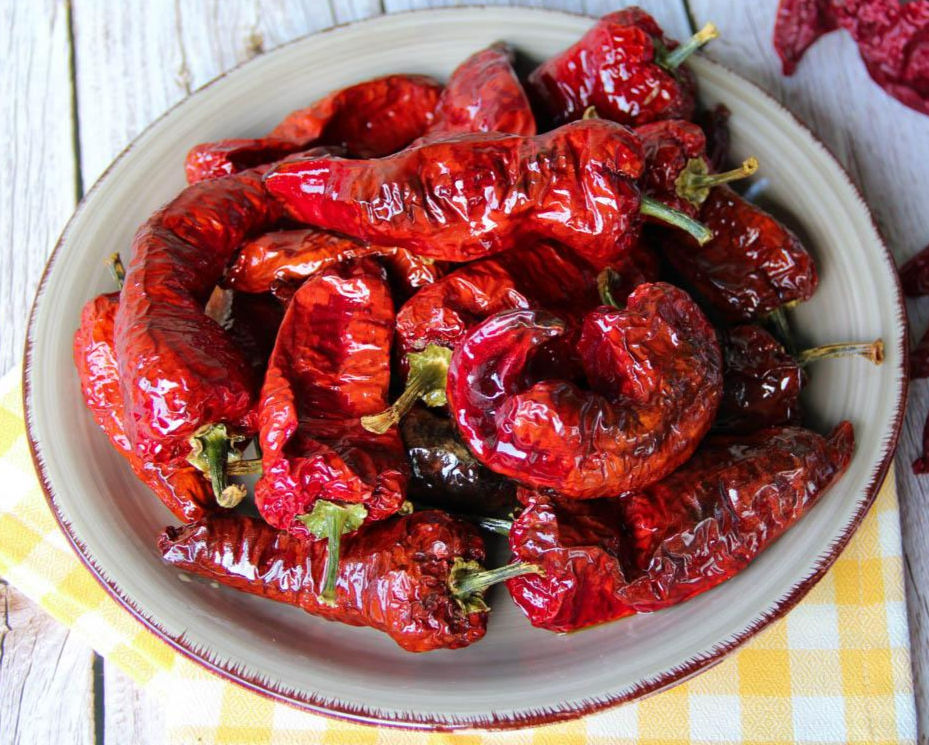
If one ingredient captures Basilicata, it might be the peperone crusco. These are long, sweet red peppers, often from the Senise area, dried in strings and then quickly fried in olive oil until crisp. The word “crusco” means crunchy.
They taste sweet, smoky, earthy, and delicate. They shatter like thin chips, but they carry the flavor of summer.
Peperoni cruschi appear in many dishes:
Crumbled over pasta
Served as a snack with salt
Paired with fried potatoes
Added to baccalà, or salt cod
Used to season soups and vegetable dishes
They also show a key Lucanian habit: preserving abundance. A summer crop becomes a winter flavor. Sun and air do part of the cooking long before the pan comes out.
Pasta in Basilicata is handmade and shaped by the hand

Lucanian pasta is usually made without eggs, using durum wheat semolina and water. The shapes are built for sauces made from tomatoes, legumes, breadcrumbs, pork, or vegetables.
Some common types include strascinati, a dragged pasta shaped by pressing dough against a board with the fingers. Its rough surface catches sauce well. Cavatelli are small and curled, found across southern Italy, including Basilicata. Lagane, broad strips of pasta, are often paired with chickpeas in a dish known as lagane e ceci.
Breadcrumbs appear often as a topping, sometimes called the poor person’s cheese. Toasted in olive oil with garlic or chili, they add crunch and richness. On pasta, they make simple ingredients feel complete.
A dish of pasta with cruschi peppers and breadcrumbs tells you a lot about the region. It uses wheat, dried vegetables, oil, and skill. Nothing fancy, nothing wasted, everything balanced.
Bread is not a side dish here
In Basilicata, bread has always been more than something served beside a meal. It is a base, a tool, and a symbol of household care.
Pane di Matera is especially famous. Made with durum wheat semolina, it has a deep crust, golden interior, and a shape that can resemble a small landscape of folds and peaks. Its protected status recognizes both the product and the tradition behind it.
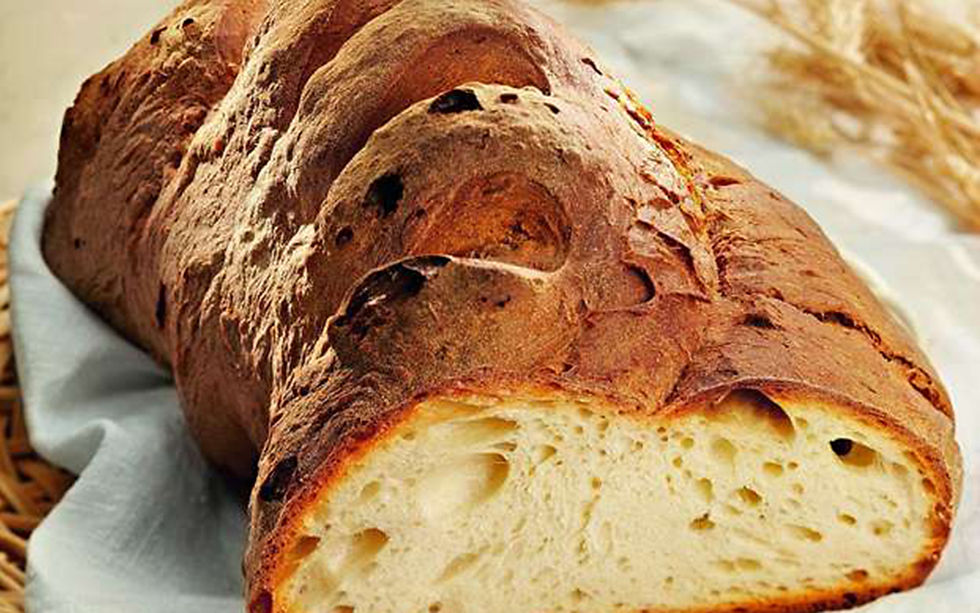
Good Lucanian bread is dense enough to last, which makes it useful in older rural cooking. Stale bread becomes an ingredient, not trash. It can thicken soups, become breadcrumbs, or form the base of dishes such as cialledda, a bread salad or soup-like preparation that may include tomatoes, onions, herbs, and olive oil.
That habit of reusing bread reveals the moral center of the cuisine. Waste is treated almost as a failure of imagination.
Pork, cheese, and mountain flavors shape the inland table
Basilicata’s inland areas have a strong tradition of pig farming, sheep grazing, and preserved meats. Pork was historically slaughtered in winter, then turned into sausages, salami, lard, and other cured products that could feed a family for months.
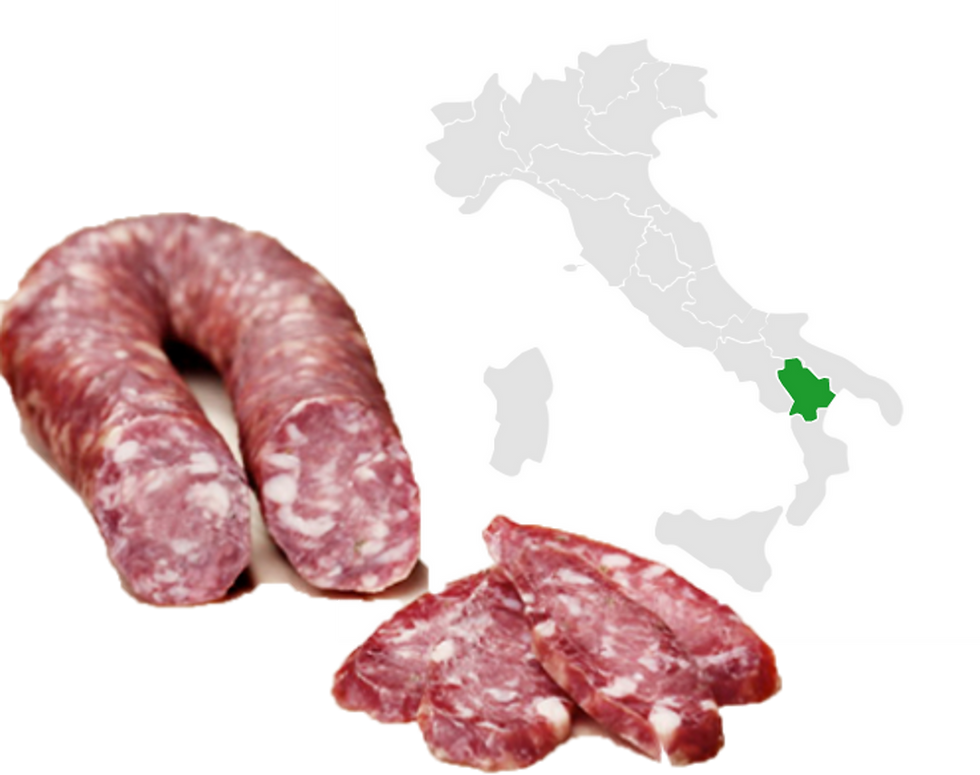
The word lucanica is linked to an ancient style of sausage associated with Lucania. Today, Lucanian sausages vary by town and family, but they often include pork, fennel seed, and sometimes chili pepper. Some are fresh, others cured.
Cheese also plays a major role. You may find:
Pecorino, made from sheep’s milk
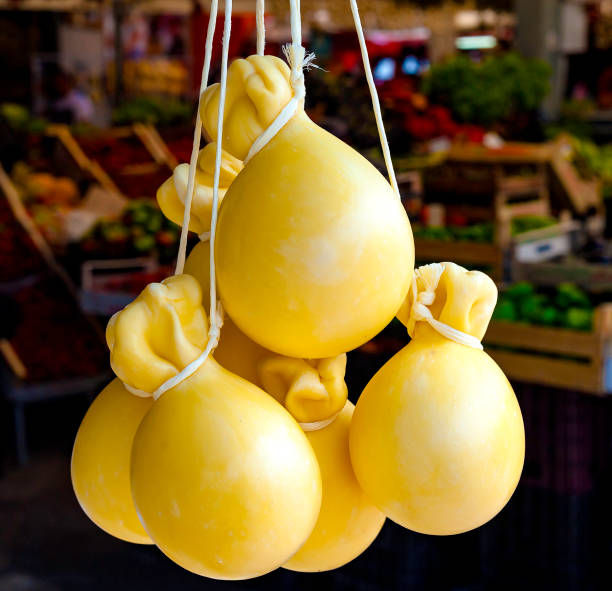
Caciocavallo, a stretched-curd cheese hung in pairs to age
Caciocavallo podolico, made from the milk of Podolica cattle and valued for its depth of flavor
Fresh ricotta, often used in pasta, pastries, or simple dishes
These foods pair naturally with the region’s breads, olives, and wines. They also show the influence of pastoral life. Shepherds, animals, mountain pastures, and seasonal movement all shaped what people ate.
The coast adds fish, but Basilicata remains an inland soul
Basilicata has access to two seas, yet its cuisine often feels more inland than coastal. Still, the coast matters.
On the Tyrrhenian side, Maratea brings fish, anchovies, octopus, and seafood pastas to the table. The Ionian coast near Metaponto and Policoro has its own seafood traditions, along with fertile areas connected to fruit and vegetables.
Salt cod, or baccalà, is widely used despite not being a local fresh fish. Like dried peppers and cured pork, it fits the logic of preservation. It could travel, last, and feed people far from the sea. In Basilicata, baccalà may be paired with potatoes, olives, peppers, or peperoni cruschi.

The coastal cooking is lighter and more marine, but it still shares the Lucanian instinct for direct flavors.
Aglianico del Vulture is the region’s great wine
Basilicata’s most important wine comes from the slopes of Monte Vulture, an extinct volcano in the north of the region. Aglianico del Vulture is made from the Aglianico grape, one of southern Italy’s noble red varieties.
The wine is known for structure, acidity, dark fruit, and earthy depth. It can age well, especially in more serious versions. It pairs beautifully with grilled meat, aged cheese, sausage, lamb, and rich pasta sauces.
The volcanic soils around Vulture help give the wines their character. This is one of the clearest examples of Basilicata’s land appearing directly in the glass.
For a complete Lucanian meal, a plate of strascinati with sausage and tomato beside a glass of Aglianico del Vulture feels right. It is not delicate, but it is balanced. It has weight, warmth, and place.
Sweets are simple, festive, and tied to the calendar
Lucanian sweets tend to appear around holidays, family events, and religious feasts. They often use nuts, honey, cooked wine, fried dough, ricotta, or dried fruit.
You may encounter treats such as cartellate-like pastries, fried dough sweets dusted with sugar or soaked in honey, and rustic cakes filled with ricotta or chocolate depending on the town. Almonds and walnuts appear often, especially in festive baking.

As in much of southern Italy, sweets are not only dessert. They mark time. Christmas, Easter, weddings, patron saint days, and Carnival each have their own flavors.
Coffee and a small pastry in a Lucanian town square can feel modest, but it often carries generations of habit.
How to experience Basilicata through food and culture
The best way to explore Basilicata is slowly. This is not a region to check off in a hurry. Its pleasures build through repetition: another hill town, another loaf of bread, another plate of pasta, another conversation with someone who explains how their village does things differently.
A rewarding route might look like this:
Start in Matera
Walk the Sassi early or late in the day, when the stone changes color. Visit cave churches, try Pane di Matera, and eat pasta with cruschi peppers.
Head toward the Vulture area
Visit Venosa or Melfi, then taste Aglianico del Vulture with local cheeses and cured meats.
Cross into the mountains
Spend time in Castelmezzano, Pietrapertosa, or nearby villages. Look for dishes built around lamb, pork, legumes, and wild greens.
Visit a festival if the timing works
Choose one rooted in local tradition, and watch with respect. These events belong to the community before they belong to tourism.
End by the sea
Maratea gives a different view of the region, with seafood, cliffs, and clear water, while still keeping the slower Lucanian mood.
A few habits will make the trip better:
Ask what is local rather than ordering what is familiar.
Try house wines and regional bottles.
Do not skip bread.
Leave room for village bakeries and small food shops.
Learn the names of regional ingredients, especially peperoni cruschi.
Expect menus to change with season and town.
Basilicata does not need to impress through luxury. Its strength lies in continuity. The same ingredients appear across generations because they work.
The real flavor of Basilicata is restraint
Basilicata’s culture and cuisine share the same character. Both are grounded, spare, and strong. Both come from a place where people learned to adapt, preserve, and make beauty without excess.
Matera’s stone rooms, Accettura’s tree ritual, handmade strascinati, dried Senise peppers, mountain cheeses, and Aglianico from volcanic soil all tell versions of the same story. This is a region where food is not separate from history. It is how history gets served.
To explore Basilicata well, look for the quiet details. Notice the bread crust. Listen to the dialect in a small town. Taste the sweetness of a fried dried pepper. Follow the road inland, away from the obvious route.
Basilicata may not reveal itself all at once. That is part of its charm. The longer you stay with it, the more it gives back.
Thank you for visiting my blog. If you find this post valuable and would like to receive similar content in the future, please consider subscribing at www.buoncibo.com. Simply enter your email address in the designated field located at the top or bottom of each page.
If you think others may benefit from this post, I would appreciate your sharing it with your network, as expanding my readership is important to me.
Best regards,
Buon appetito!

Chef John / Giovanni


Giovanni, This is a wonderful introduction to a lesser-known region of Italy. My Grandmother is from Vietri di Potenza in Basilicata. I have recently met some cousins living there and experienced a little of what you included. I have a lot more to see, do and taste. Grazie mille. Rita